Seasonal Fencing Setup Tips
There's a moment I still bear in mind from a late-October mount, when the wind felt like it was trying to shove the residential property line back right into place. The ground was just soft sufficient to let the auger bite, yet it was cooling down quick, and every opening had that fresh odor of wet dirt. By the time we obtained the last area plumbed, the temperature had actually dropped enough to make the air feeling sharper. The homeowner stood beside their yard, arms crossed, viewing the rails increase straight. "So this is the right time, after that?" they asked.
It was, yet only since we dealt with the season like a set of constraints, not an assumption. Seasonal fencing is less about selecting a nice weekend break and even more concerning collaborating with soil behavior, wetness, sunlight angle, and healing schedules. If you get those pieces incorrect, you end up with sagging panels, cloudy stain, unsteady messages, and callbacks that no one wants.
Below are the practical, field-tested ideas I use for setting up fencings across springtime, summer season, loss, and winter season, plus the tiny decisions that keep a fence looking sharp for years.
Start with the weather condition reality, not the calendar
Fence setup really feels straightforward up until you're staring at ground that declines to comply. Dirt is the real schedule chauffeur. Clay holds water and freezes in place, sandy soil drains quickly yet can cave around a post, and topsoil mixed with roots can battle a dig. When the ground is damp, it's not just "untidy." Wet soil changes just how rapidly openings collapse, exactly how concrete sets, and how level messages stay as soon as the trench settles.
The daring part of fence work is that you can still make it occur in many seasons. The trick is to change method. A fence company that only offers one "conventional" approach for each month is selling self-confidence, not craftsmanship.
Here are the huge weather variables that matter:
- frost deepness and freeze-thaw cycles
- rainfall strength and just how fast your lawn drains
- wind (for panel positioning and post set)
- sun and temperature for tarnish and sealant curing
Even if your mount day looks tranquility, the conditions over the next 24 to 72 hours can decide whether your final fence line stays tight or establishes that sluggish, slipping looseness.
Spring: the season of soft ground and quick decisions
Spring can be a sweet spot, yet it relies on where you live. In lots of regions, spring suggests defrosting ground that's sloppy, then drying rapidly. That home window can be brief, so it assists to plan early while the forecast is still predictable.
Digging and blog post stability
In thawed however still-wet dirt, openings have a tendency to drop after you excavate them. That doesn't imply you can't mount. It indicates you need a steadier workflow. I've had spring installs where we had to change hole form and timing so concrete or post set materials really did not rest exposed too long. If you leave a hole open overnight in extremely soft conditions, you'll usually return to a sloped edge or partial collapse. And when a post is established on uneven footing, it's difficult to fix without reworking.
If your fence style consists of a great deal of corner articles and finish blog posts, deal with those as the support points. In springtime, those blog posts are worthy of additional attention due to the fact that they take extra tension and even more lots. Spend the time to obtain them plumb and aligned prior to you put or pack. A little positioning error becomes a visible bow along the run.
Staining and finishing
Spring is challenging for surfaces. Warm climate can attract you to stain instantly, but spring humidity can stay high longer than individuals anticipate. If you discolor when the timber is still moist, you can obtain blotchy shade or irregular absorption. In method, that suggests checking not simply the air temperature level, but likewise whether the boards look dry with the surface area and along the ends.
A sensible mindset: if you can't confidently anticipate cure time, you might want to wait on staining and focus on structure first. Structure is the foundation. Color can come when the timber and the weather condition cooperate.
Vegetation and access
Spring is likewise when grass expand strongly. Origins can be much more energetic, and spring rains can soften paths. If you recognize you'll need devices accessibility, think about arranging around times when the backyard can take care of traffic without ruts deep sufficient to hide wheel tracks. Those ruts come to be water channels, and water networks come to be erosion, and disintegration comes to be post area concerns later.
Summer: the moment for speed, yet not shortcuts
Summer fencings rise quick since the ground normally coordinates. That's the bright side. The caution is that summer season actions promptly in the other direction, as well. Too much sunlight, fast-drying concrete exposure, or leaving spaces unaddressed can turn "smooth progression" right into "we'll fix it later," which is just how problems get expensive.
Heat management for concrete and setting
Concrete and cement-based post set blends have functioning home windows. In heat, what feels like adequate time at the beginning of the day can be too little by noontime. I have actually seen staffs scramble to keep mix convenient when the sunlight hits the ground hard. The fix is not magic. It's planning: batch dimension, hydration control per the supplier's assistance, and a routine that focuses on vital set posts earlier.
Also consider shade and wind. Strong sun dries subjected portions of established product. Wind increases moisture loss. That can cause weak surfaces or surface irregularities around tops and sides. If you're installing message caps or strategy to add trim, it assists to shield the job from severe drying and to allow proper set before including loads or securing extra components.
Wood movement and alignment
Wood expands and shrinks with moisture content and temperature level swings. In summer, the boards might look "excellent" at install time, then clear up slightly as humidity changes. That typically appears as small gaps that are simple to ignore in the beginning, then noticeable when you step back months later.
If you're taking care of latticework or areas with several smaller sized items, take notice of exactly how the panels are tensioned. Over-tightening can create bending or misalignment as the period modifications. Under-tightening can leave you with sag. A great installer strikes that equilibrium and watches on just how the fence acts as the day cools down down.
Finishes that stand up in sun
If you're discoloring in summertime, utilize the sunshine to your advantage, not as a punishment. Early morning installs can assist, because you may get even more constant drying out time and much less mid-day warm anxiety. Yet inspect that your discolor strategy accounts for dew or remaining dampness, specifically if your lawn has shaded locations that stay wet longer.
If you've obtained a fencing line that catches intense afternoon sunlight, I have actually found it's better to coat in an order that respects drying time between sections. Tarnishing whatever at once can suggest overlapping damp edges and subtle distinctions in sheen.
Fall: the sweet area for structure, with one big exception
Fall usually seems like the very best period for developing a fence since temperatures are moderate and rain is generally much less consistent than spring. The light is also flexible, which matters when you're chasing after a straight line.
But fall has an exception: the threat of very early ices up. Dirt can cool down faster than you expect, and if you're establishing blog posts in late autumn, you require to consider what takes place when overnight temperature levels go down listed below freezing and after that increase again. Freeze-thaw cycles can move inadequately set blog posts or create a little soil heave under a shallow footing.
When loss functions beautifully
Fall works specifically well when you can start and complete the core structure, consisting of post set and bracing, before the first substantial freeze. If you mount and permit proper set time, your articles stabilize prior to the ground begins its freeze drama.
Also, autumn weather often provides you the best working problems for teams. People make fewer blunders when they are not handling harsh heat. That's not a motivational poster concept. It's actual. A tranquil team makes accurate cuts, remains individual with progressing, and measures twice without rushing.
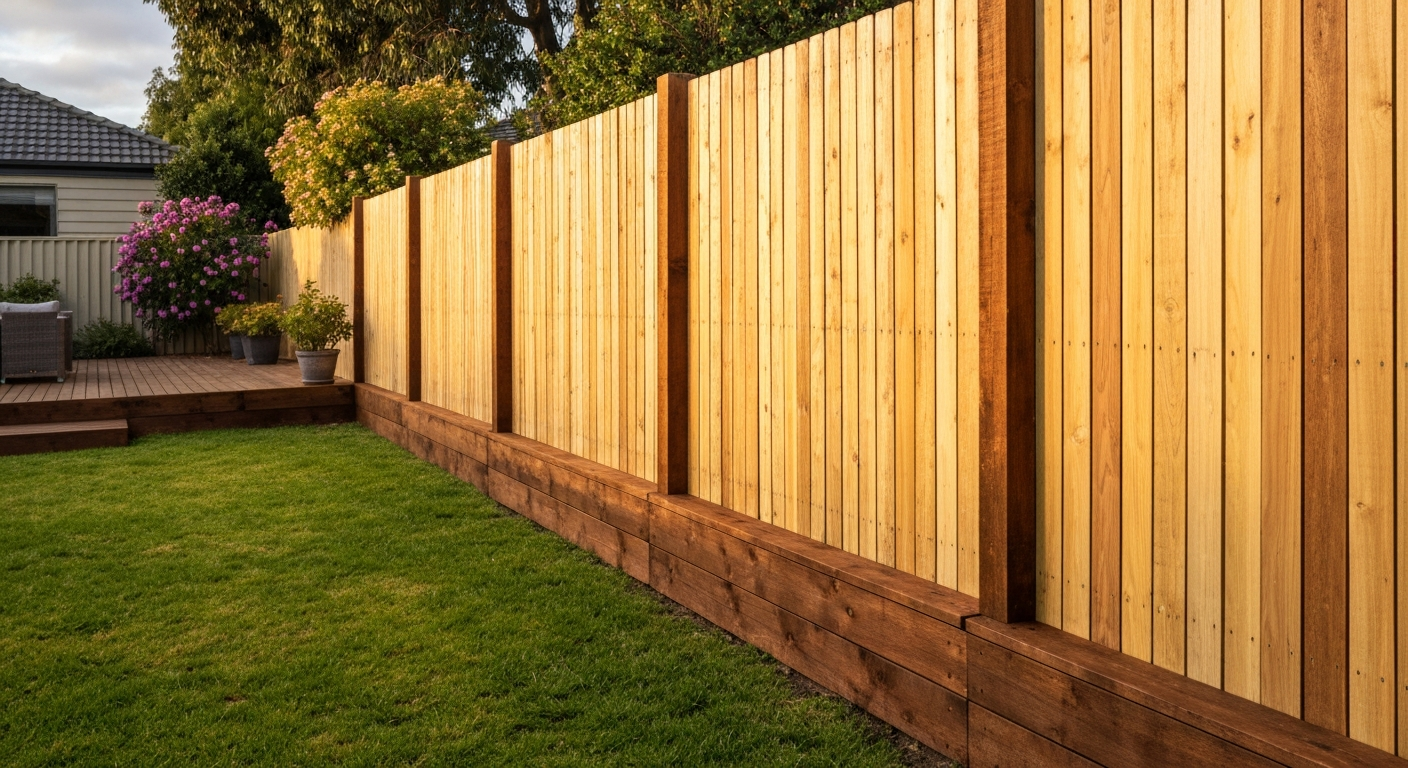
The completing window
Like springtime, autumn impacts discoloration and securing. Temperature and moisture control healing. Lots of areas obtain damp nights, and damp can sneak into the mini areas of wood. If you discolor, you desire a forecast that sustains dry time via the day and adequate time afterward to minimize the opportunity of wetness interfering.
If your schedule is tight, think about focusing on the set up and postponing discoloration till conditions are right. It's better to deliver a fence that is structurally sound and afterwards finish it appropriately than to go after a finish deadline and wind up with patchy color.
Drainage still matters
Fall rains can be extreme. Also if the air is amazing, the lawn may saturate. When water kicks back the post location, it influences security and can advertise timber rot if dirt remains in call with without treatment wood.
One area behavior: I seek where water in fact goes, not where a home owner says it "generally goes." Near-surface grading can shock you. If your fence line remains on a reduced area, installing in loss can function well, however you may likewise want to address drainage around blog posts so the fencing does not come to be a slow-moving sponge over winter.
Winter: feasible, but construct for the ground you have
Winter fencing installation is a various video game. Some regions make it almost difficult to dig deep into, and that's not laziness, it's physics. Icy soil resists excavating, and forcing it can lose time and wear devices swiftly. But where frost is mild or the ground thaws throughout the day, winter can still be viable.
The secret is preparing about thaw home windows and selecting the best setup technique for your conditions.
If the ground is frozen solid
If the ground is hard like pavement, you might not be able to dig correct openings without excessive effort. Trying it can bring about incomplete ground deepness or irregular opening wall surfaces. An uneven opening can produce spaces, and voids can become settlement factors later.
In those situations, the smarter move is normally to arrange for when you can dig deep into cleanly, or to pick a system that addresses footing security without depending on excavating through icy soil. The particular option relies on your neighborhood problems and fencing style, so your installer must be sincere regarding what's practical rather than pushing a one-size-fits-all approach.
If you obtain a light winter or a thaw window
In milder winter seasons, you may have days where the ground softens sufficient to dig. That can permit a partial install: posts, supporting, and positioning, with completing postponed till warmer weather.
Even after that, don't assume "no frost today" indicates "everything is fine." Look for freeze previously in the day, look for difficult edges that indicate partial cold listed below the surface, and prevent establishing articles in locations where water is pooling under a slim layer of thaw.
Fast, clean work beats long, exposed work
If you are mounting in wintertime, maintaining openings and materials revealed for too long can be risky. Cold air and temperature level decreases can impact material handling and set. The most effective results normally originate from a focused plan, less disturbances, and a team that can relocate promptly while still measuring correctly.
Winter likewise exposes another issue: if you set up in snow cover or near ice, you can shed view lines for positioning. Bring a plan for noting and validating line and level, not simply for the initial post however, for the whole run.
The support points that make a decision whether a fencing lasts
A fencing is just like its edges, finishes, and gateway openings. You can have excellent pickets and slats, yet if the anchor messages are sloppy, the whole system at some point looks tired. This is true in every period, but period modifications just how simple it is to get those support factors right.
Corner and end posts
Corner and end messages take the side anxiety of the fence. When the ground is wet or shifting, these posts are the first to show issues: leaning, loosening up, and voids that open up unevenly along the run.
In the field, I deal with support messages like they are being set for a bridge, not a yard attribute. That means spending quality time on plumb and placement, validating measurements, and not hurrying established material timing. If you're dealing with a fence company, ask just how they handle corner bracing and stress points, and whether they validate placement after set rather than assuming the initial placement will certainly stay.
Gate openings are their very own universe
Gates include moving components, weight, and tons. In cozy weather, joints act predictably, but in wet or cold problems, gateway alignment can move a little as the structure broadens or agreements. If you install a gateway in a period with large day-to-night temperature swings, you could require to fine-tune hardware later.
That's not a reason to avoid seasonal installs, it's a reason to plan for a minimum of a follow-up modification if the climate cycles are extreme.
Soil, water, and how they alter your setup method
Seasonal fence problems often get criticized on "poor materials," however the genuine offender is often water and soil habits. Postholes in damp dirt can break down around an article. Postholes in completely dry dirt can allow contraction and negotiation. Freeze-thaw can raise or disturb freely set posts.
A basic way to think of it
Before anybody mixes anything, walk the line and look for indications:
- Where does water collect after rain?
- Do you see soft, squishy areas or cracks that reopen after drying?
- Are there incline changes along the fencing line that recommend unequal drainage?
Concrete and blog post collection decisions
Whether you use concrete, compacted base products, or a different setting strategy depends upon local suggestions, fencing type, and the problems you're mounting in. The honest recommendations from a seasoned fence company will certainly match the approach to the backyard, not to a fixed staff routine.
In wet periods, more emphasis goes toward ensuring the blog post base is maintained and secured from continuous water call. In freeze-prone locations, article depth and set stability matter since freeze-thaw works like a lever against improperly seated posts.
Finishing and maintenance schedules by season
Most people think fence job is just the setup. Actually, completing and upkeep become part of the exact same project timeline. A fencing that gets mounted in spring yet stained months later on can still look terrific if it's shielded from dampness. A fence that obtains stained at the wrong time can reveal put on early.
I like to think in phases:
- install framework first, verify alignment
- let the timber accommodate if needed
- stain or seal when temperature level and wetness align
- plan a maintenance check after the first large weather change
You do not need to infant your fence, however you do intend to prevent https://lnkd.in/p/gbJ5ETTb foreseeable blunders, like discoloration when the surface still really feels great and damp.
Practical install options that save cash later
The seasonal pointers people bear in mind are about weather condition. The money-saving options are normally about information that appear months down the road.
Here are a few decisions that usually different "excellent from terrific":
- Use post spacing and equipment options that match the fencing layout, not the design alone.
- Account for wind exposure. A surround an open area needs bracing and established security that a protected backyard doesn't.
- Protect the bottom of timber components from consistent wetness contact when possible.
- Plan around inclines so you don't end up with uneven panel height that looks fine up close and wrong from the street.
If you're managing an irregular backyard, ask your installer just how they intend to deal with quality adjustments. Step-down methods, racking panels, and picket height changes each have various trade-offs. The appropriate choice relies on your fencing design and the appearance you desire, however the incorrect choice can result in weak mounting or a certainly inconsistent line.
Two fast lists you can really use
Sometimes the very best means to best fencing company deal with seasonal unpredictability is to develop a small, repeatable decision process. Right here are two short checklists I utilize on jobsites, and they work whether you're working with a team on your own or speaking with a fencing company.
Before you book the install
- Verify you can dig deep into holes to the called for deepness for your area and fencing type.
- Check the projection for the next couple of days, not just the installation day.
- Confirm access routes for trucks or equipment after rainfall or snow.
- Review whether staining or sealing becomes part of the schedule or prepared for later.
- Identify inclines, drain reduced places, and any buried challenges (origins, rocks, old lines).
After the fencing is up (do this quickly, then proceed)
- Walk the full line and look for obvious spins or misalignment.
- Check that edge and gateway factors really feel solid and do not shift with light pressure.
- Verify that panels or pickets are uniformly mounted along each run.
- Take a few photos of the full fencing and close-ups of support points.
- Note any places where water might pool around post areas.
These checks take less time than people expect, and they catch issues early, prior to the timber weather conditions or the season presses the backyard in a brand-new direction.
Common seasonal problems and just how to prevent them
Problems do not constantly introduce themselves at install time. They appear later on, normally after the yard has actually endured at the very least one full cycle of warm, rainfall, or cold.
Summer: panels look right, after that sag
Heat and moisture changes can reveal stress issues. If a fencing is set up with equipment that's too tight, or if post collection wasn't offered appropriate time, you may see a slight sagging or looseness after the first hefty weather occasion. The evasion is persistence with set times and proper bracing at anchor posts.
Fall: very early freeze changes superficial posts
If you establish blog posts too late in locations with very early cold, freeze-thaw can relocate them discreetly. You might not discover till you see small voids or a gentle lean that wasn't there before. The evasion is scheduling and foundation deepness preparation, plus picking a setting technique matched to ice up behavior.
Spring: blotchy discolor and plunged holes
Wet dirt drops can misalign articles. Moist wood surfaces can bring about irregular discolor. The evasion is controlled sequencing, drying checks, and letting the base structure establish prior to you start finishing.
Winter: alignment goes off when visibility is poor
Snow cover, ice spots, and cool tight winds can throw off dimensions or line visibility. The evasion is careful noting and a plan that consists of confirming alignment greater than once.
Choosing the right fence company for seasonal success
Season issues, however so does communication. The fence company you hire need to speak like they have actually gotten on actual sites in real seasons. If they only talk about fence styles and neglect website conditions, be cautious.
Ask inquiries that compel them to show their thinking, not just their sales pitch. A couple of that are worth asking:
- How do you manage wet soil or thawed out ground?
- What's your technique to anchor blog posts in freeze-prone areas?
- Do you advise discoloring at the time of installation, or after a treating period?
- How do you verify placement after setting posts?
A certain installer must address with specifics. Not dramatic pledges, actual techniques: how they excavate, exactly how they set and support, and exactly how they take care of the coating timeline.
The ideal season is the one you prepare for
If you live someplace with four unique seasons, you don't have one best time for fencing installment. You have a collection of compromises. Spring provides you convenient conditions however wet dirt. Summer season provides you stability but needs rate without faster ways. Loss uses light weather but view very early freeze danger. Winter can operate in the ideal environments and thaw windows, however you build differently.
The most daring part of the job is dealing with the climate like a companion in the strategy, not an opponent you deal with. When you match technique to the season, the fence does what fencings need to do: it holds line and stands up, via wind, through rain, via the quiet shift of a backyard changing with the year.
If you're planning your install, select a window and afterwards prepare the operations around it. Structure initially. Verify support factors. Regard set and treatment time. Finish when the wood and the projection agree. That's exactly how you end up with a fence that looks intentional, not short-lived, regardless of what the season determines to toss at it.